
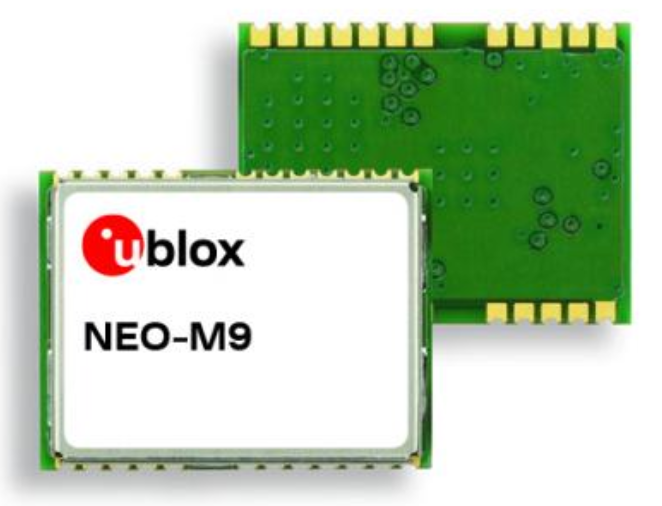
- Mfg Part Number: NEO-M9N-00
The NEO-M9N GNSS receiver features the u-blox M9 standard precision GNSS platform, and provides exceptional sensitivity and acquisition times for all L1 GNSS systems. u-blox M9 receivers are available in different variants to serve automotive and industrial tracking applications, such as navigation, telematics and UAVs.
The u-blox M9 standard precision GNSS platform, which delivers meter-level accuracy, succeeds the well-known u-blox M8 product range. u-blox M9 receivers support concurrent reception of four GNSS. The high number of visible satellites allows the receiver to select the best signals. This maximizes the position accuracy, in particular under challenging conditions such as deep urban canyons. u-blox M9 receivers detect jamming and spoofing events and report them to the host, which allows the system to react to such events. Advanced filtering algorithms mitigate the impact of RF interference and jamming, thus enabling the product to operate as intended. The receiver also provides higher navigation rate and improved security features compared to previous u-blox GNSS generations.
The NEO-M9N module is available in the 12.2 x 16.0 mm NEO form factor LCC package.
- Features
- Maximum position availability with concurrent reception of 4 GNSS
- Advanced spoofing and jamming detection
- Excellent RF interference mitigation
- Pin‑compatible with previous NEO products
Related Content

ZED-X20P All-Band High-Precision GNSS Module from u-blox
With centimeter-level accuracy and advanced capabilities like RTK, PPP-RTK, and PPP, the ZED-X20P is ideal for industries that depend on precise location data, from agriculture and automation to surveying and beyond.
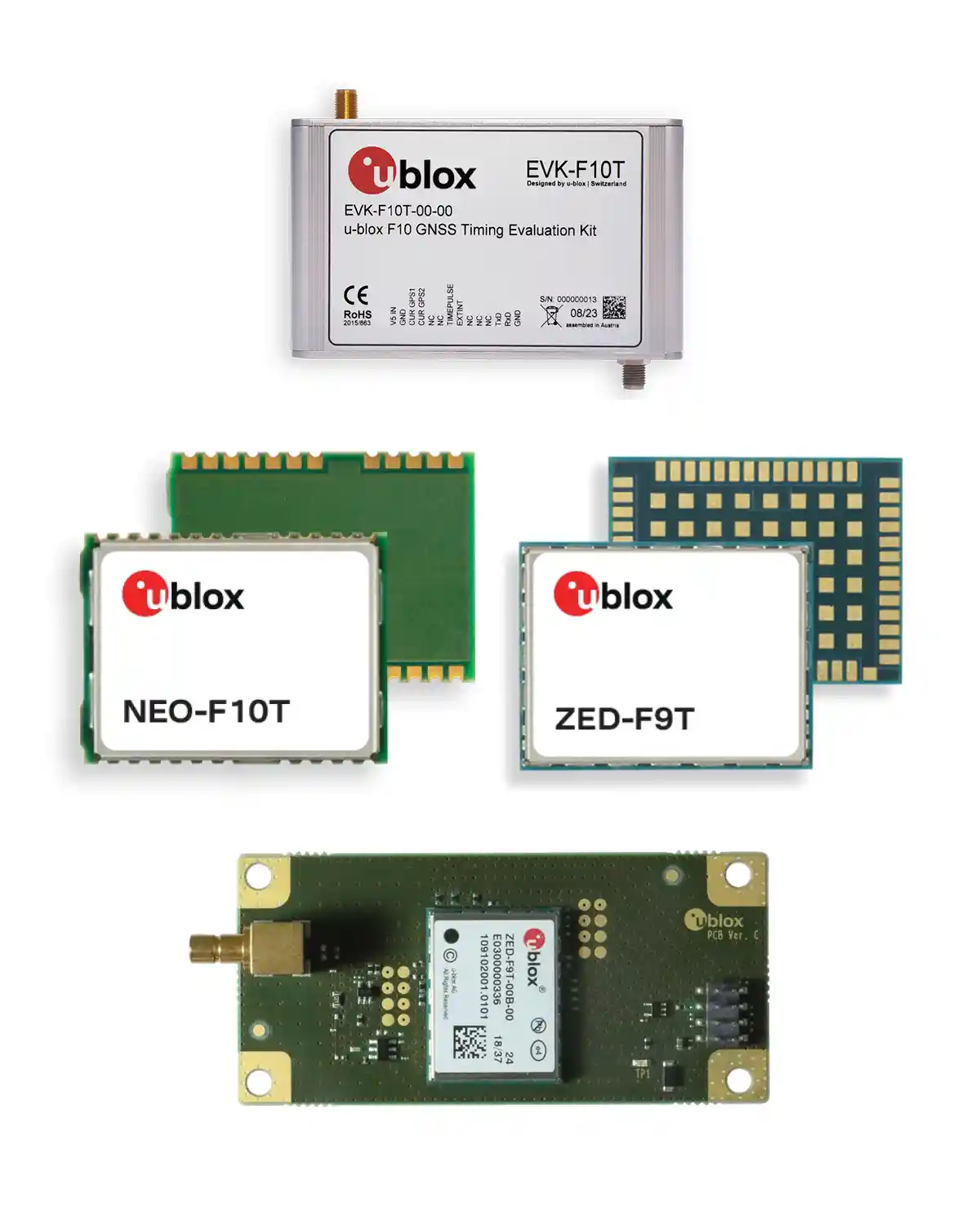
Precision Timing and Synchronization Solutions from u-blox
u-blox is a leading provider in GNSS solutions that are tailored for every customer’s needs.
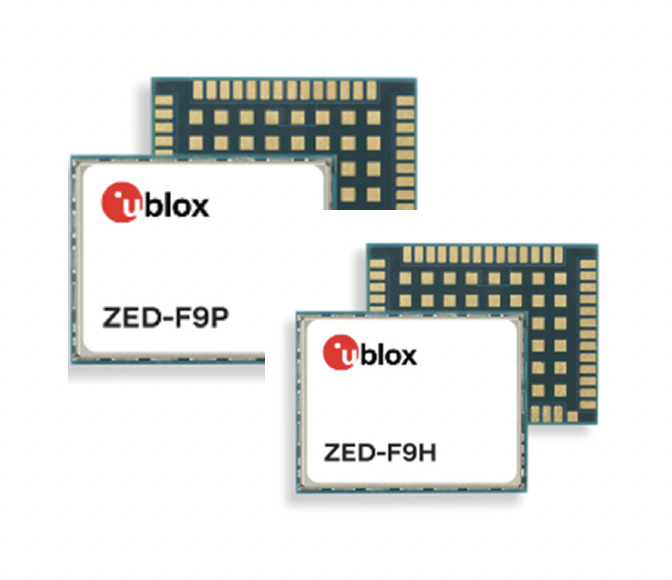
Global Precision GNSS Navigation and Positioning Made Easy
Precision Navigation and Positioning (PNP) refers to the ability to accurately determine location and orientation in three-dimensional space using Global Navigation Satellite Systems (GNSS).
